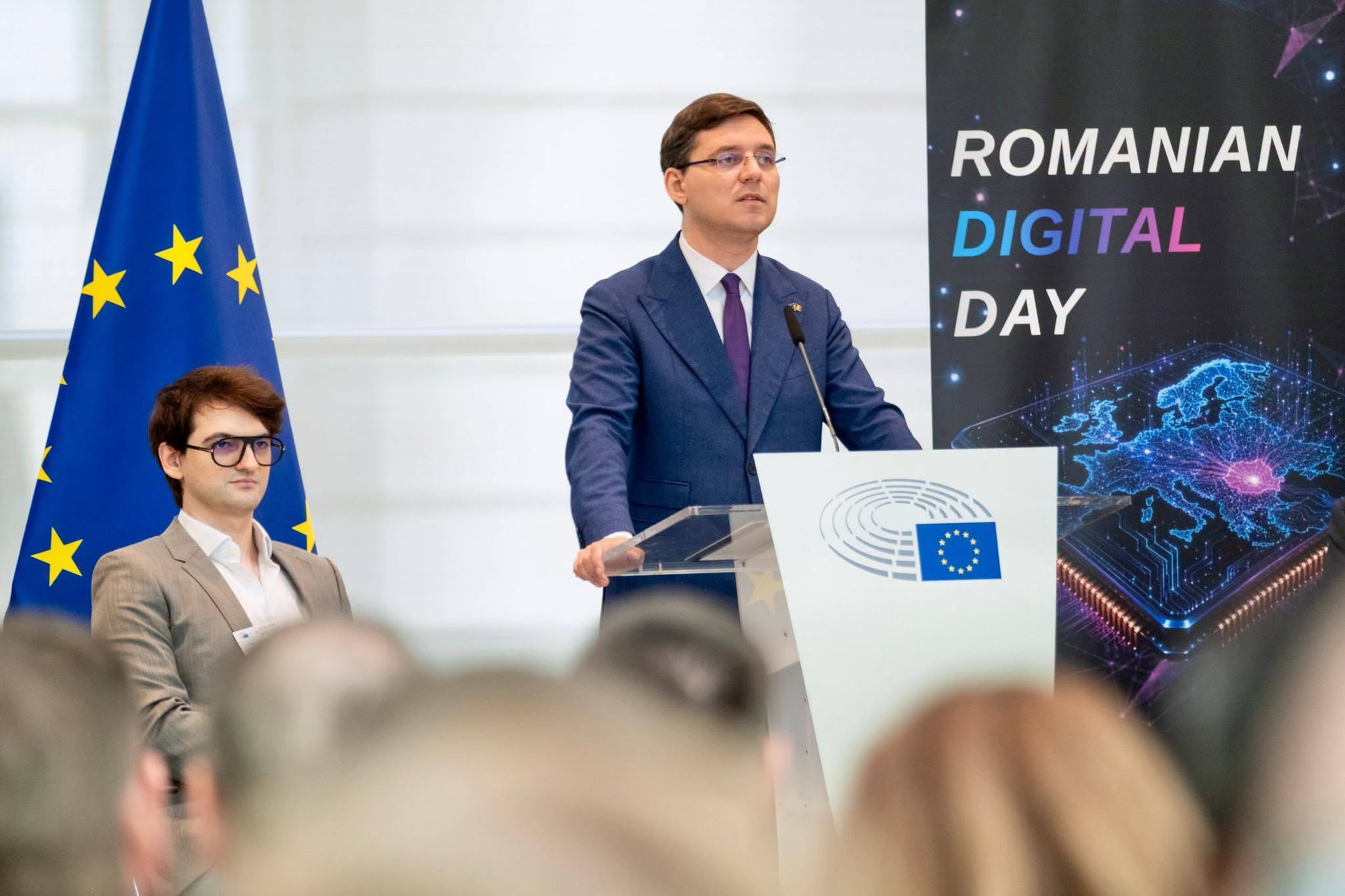
Victor Negrescu, Vice-President of the European Parliament, is calling for a long-term EU budget for the period 2028–2034 that is capable of addressing the challenges posed by geopolitical tensions and economic instability, so that no one is left behind as the European Union adapts to an increasingly complex global environment.
The EU’s long-term budget for the post-2027 period: a strong social-democratic dimension in the EP’s negotiating mandate with Member States
The European Parliament has established its negotiating position with member states regarding the EU’s long-term budget for the post-2027 period.
As Vice-President of the Party of European Socialists and coordinator of the European Social Democratic family’s working group on the future Multiannual Financial Framework, Victor Negrescu contributed significantly to the approval of a document containing 50 concrete proposals and solutions for the future budget of the European Union.
“For us, the priorities are clear: a more social Europe, greater investment in health and education, support for local development, for housing issues, and for a high-performing agricultural sector capable of protecting farmers and ensuring food security,” emphasized Victor Negrescu.
Thus, the European Parliament’s negotiating mandate has a strong social-democratic dimension, thanks to the significant amendments tabled by Victor Negrescu together with the S&D Group in the European Parliament:
– the development of rural communities and the reduction of disparities between regions;
– more funds for sectors vital to a social Europe serving its citizens;
– essential support for food security and agriculture;
– more opportunities for young people, education, mobility, and sports through increased funding for Erasmus+;
– support for civic engagement and democratic participation through increased funding for AgoraEU;
– investments in jobs, inclusion, and support for the vulnerable;
– stronger support for SMEs to facilitate access to financing and support economic development;
– engaging local authorities and social partners so that European funds reach communities more effectively;
– reducing disparities within the EU by continuing support for convergence countries and ensuring a fair distribution of competitiveness funds;
– recognising the housing crisis as a key European policy priority;
– strengthening democracy and supporting civic engagement.
Furthermore, at his request, the European Parliament’s Committee on Health decided to draft an opinion on the upcoming 2028–2034 National and Regional Plans with the aim of securing funding for healthcare, which could amount to up to 20 billion euros for this vital sector.
According to Victor Negrescu, this will mean:
– modern hospitals and robust medical infrastructure;
– solutions to the healthcare staffing crisis;
– better access to medicines and treatments;
– investments in prevention and research;
– rapid response to health emergencies;
– cross-border cooperation among EU member states.
Furthermore, the MEP’s request to establish a dedicated fund for the fight against cancer in the next long-term budget was included in the European Parliament’s budget proposal.
“Health can no longer be treated as a cost. It is the foundation of a strong economy and a functioning society,” Victor Negrescu emphasized.
Additionally, European Parliament Vice-President Victor Negrescu secured an increase in funding for justice to 890 million euros in the EU’s future multiannual budget.
According to him, the funds would be invested in: European judicial cooperation, judicial independence, digitalisation, simplification of legislation, and real access to justice for all, including the diaspora and vulnerable people.
The goal is to combat corruption, drug trafficking, and cross-border crime.
New Sources of Revenue to Fund Member States’ Priorities
In light of the debt accumulated from the borrowing undertaken to finance Europe’s economic recovery, the emergence of new political and security challenges, and growing pressure on public finances, the European Union needs additional and sustainable sources of revenue to support its common priorities.
To this end, MEP Victor Negrescu has proposed the introduction of a European tax on online gambling and online betting platforms to provide additional funding for education, youth programs, mental health, and addiction prevention policies and child protection.
This concrete European solution could bring in between 14 and 28 billion euros for the future European long-term budget.
The proposal, put forward and actively promoted by Victor Negrescu, is already being considered as part of the broader debate on new EU own resources is set to go through an accelerated review process by the European Commission.
According to Victor Negrescu, new own resources are essential to finance European investments in key areas such as education, healthcare, economic competitiveness and support for local communities, while avoiding additional pressure on Member States’ national contributions to the EU budget.
“Europe must find new, fair, and modern ways to invest in the future. We cannot just talk about European priorities without also building the solutions to fund them. The future European budget must truly meet people’s needs and reduce disparities between regions and communities,” emphasized the Vice-President of the European Parliament.