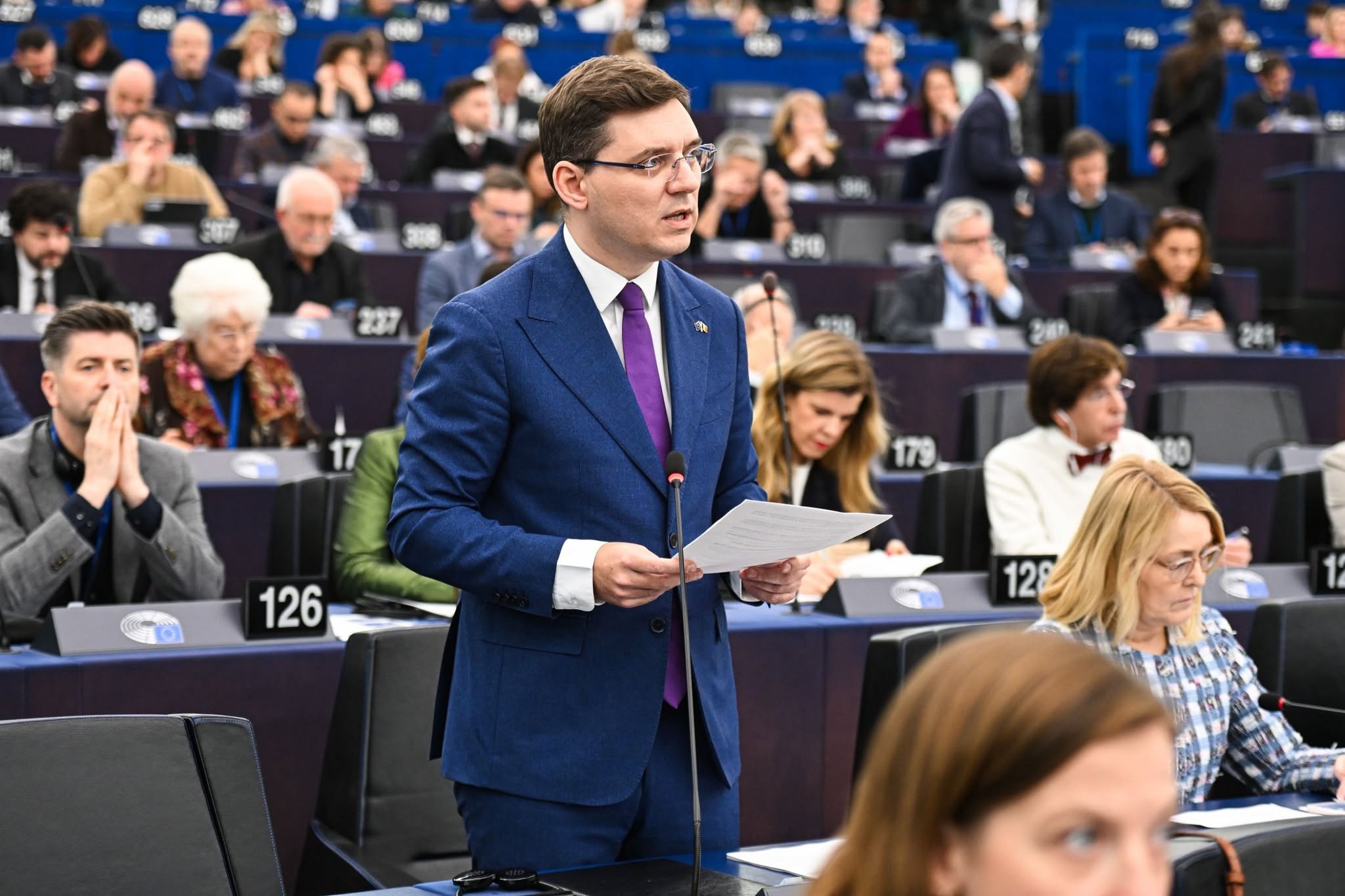
MEP Victor Negrescu, Vice-President of the European Parliament, calls for the future long-term budget of the European Union to prioritize education, healthcare, and support for vulnerable families. The amendments he has proposed aim to turn European funds into real development opportunities for member states.
”The future EU budget is not just about figures. It is about people. About what kind of Europe we want to build. I want a European budget that protects, invests and leaves no one behind”, was the clear message from the MEP.
Victor Negrescu’s concrete proposals are:
- More money for education, because “young people deserve a better future”.
- A proper health budget, focusing on prevention, mental health and essential treatment
- Support for vulnerable children and families as part of the fight against poverty
- Investment in research, technology and artificial intelligence, but also in skills training
- Defending cohesion policy, supporting farmers and rural areas
- Simpler rules for accessing EU funds
- Full transparency, through a public tracking system for EU spending.
”These measures are essential to keep Europe relevant and close to its citizens. The European Parliament has spoken. We await the feedback from the Commission and the Council”, emphasized Victor Negrescu.
The Vice-President of the European Parliament also discussed a number of the above priorities with Piotr Serafin, European Commissioner for Budget, Anti-Fraud and Public Administration.
The dialogue also focused on recovery funds, given that Victor Negrescu is also responsible for the implementation of the Recovery and Resilience Facility.
In this context, the MEP called for an extension of the implementation of mature projects from the National Recovery and Resilience Plans so that investments are not wasted.
The European Parliament adopted its vision and demands for the EU’s 2028-2034 budget in early May.
These include:
- a post-2027 multiannual budget adapted to geopolitical, economic and environmental realities;
- rejection of the Commission’s idea to replicate the Recovery and Resilience Facility model through a ”national plan for each country”
- setting up a new, dedicated fund to mobilize private and public investment to finance EU competitiveness and defence
- a more transparent, flexible budget, including two special instruments: one for disaster relief and another for other unforeseen challenges.
- making access to funds subject to respect for EU values and the rule of law through a smart mechanism that does not punish beneficiaries for government actions
- real new sources of revenue to repay the borrowing costs of NextGenerationEU, so that key EU priorities do not suffer
All eyes are now on the European Commission, which will announce the official proposal for the new budget in July 2025.